
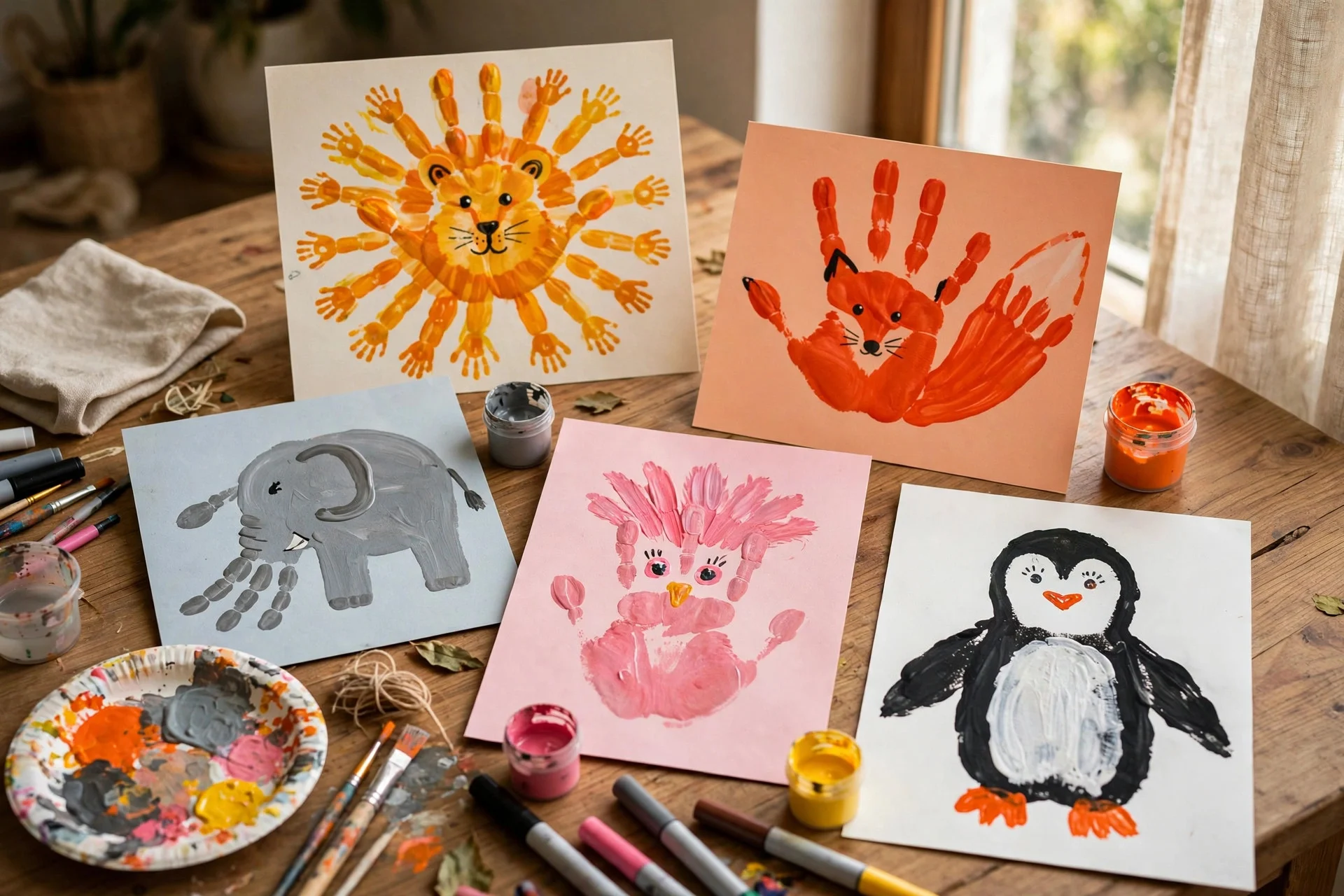
Handprint Animal Crafts for Kids (Free Templates)
The first handprint animal we ever made ended up on my couch. Not the paper — the couch. My daughter was two, her palm was loaded with orange paint, and somewhere between the kitchen table and the sink she high-fived a cushion. That cushion cover still has a faint orange ghost on it, and it’s my favorite thing in the living room now. The lion it was supposed to become turned out fine too.
That’s the thing about handprint crafts. The paper versions become the keepsakes grandmothers frame and dads keep in desk drawers — I’ve mailed more of these to my kids’ grandparents than every other craft we’ve made combined. They’re fast, they’re cheap, and a hand that’s that small this year won’t be next year. So here are the eight animals we make on repeat — the ones that actually look like what they’re supposed to be.
Supplies You Already Own
No specialty shopping trip, I promise. Everything below is probably in a drawer right now:
- Washable tempera paint (the washable part is not optional — see couch, above)
- White cardstock, not printer paper — printer paper wrinkles and curls the second wet paint touches it
- One foam brush or a wide paintbrush for loading little hands evenly
- Black marker (fine tip for eyes, chunky for outlines)
- A paper plate and a pack of baby wipes
- Colored cardstock if you want to get fancy — blue for the penguin, a few sheets of whatever’s in the pack
Read This First: The 5-Minute Setup That Saves Your Sanity
Every craft disaster I’ve had traces back to skipping setup. Do these four things before any paint pot opens. Aprons or smocks on — or just strip toddlers down to a diaper, which is honestly the easier route. Squeeze the paint onto a paper plate instead of letting anyone near an open pot. Lay the baby wipes open and within arm’s reach, because the moment you need one is never when you can go find one. And if you’re using the printable templates, print them before the paint comes out. Paint first, printing later is how printers get redecorated.
1. Handprint Lion
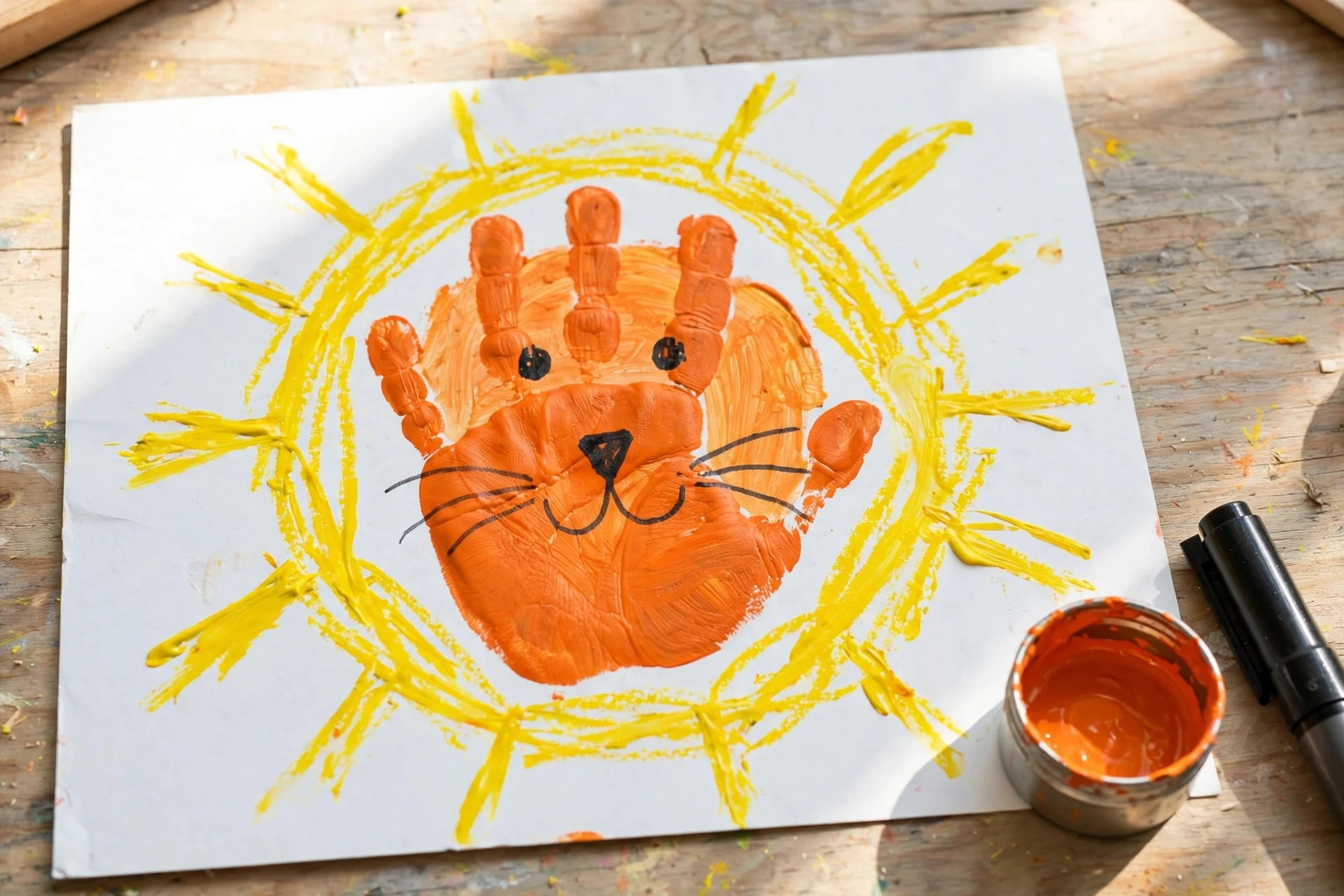
The lion is where we start, always. It was my middle kid’s nursery door sign for two years, and it’s the most forgiving animal on this list — a wobbly print just looks like a scruffier mane.
Age: 18 months+ (with you doing the face) · Mess level: medium
- Brush orange paint over the whole palm and fingers — thicker than you think; thin paint prints pale.
- Press down fingers-spread onto white cardstock, lift straight up, and let it dry completely. Ten real minutes, not two.
- Draw a wobbly circle of yellow around the palm for the mane. Short triangle strokes look great and hide every smudge.
- Marker in two eyes, a nose, and whiskers. The palm is the face, the fingers are the top of the mane.
Make it a keepsake: write the date and their age in the corner. You think you’ll remember. You will not.
2. Handprint Elephant
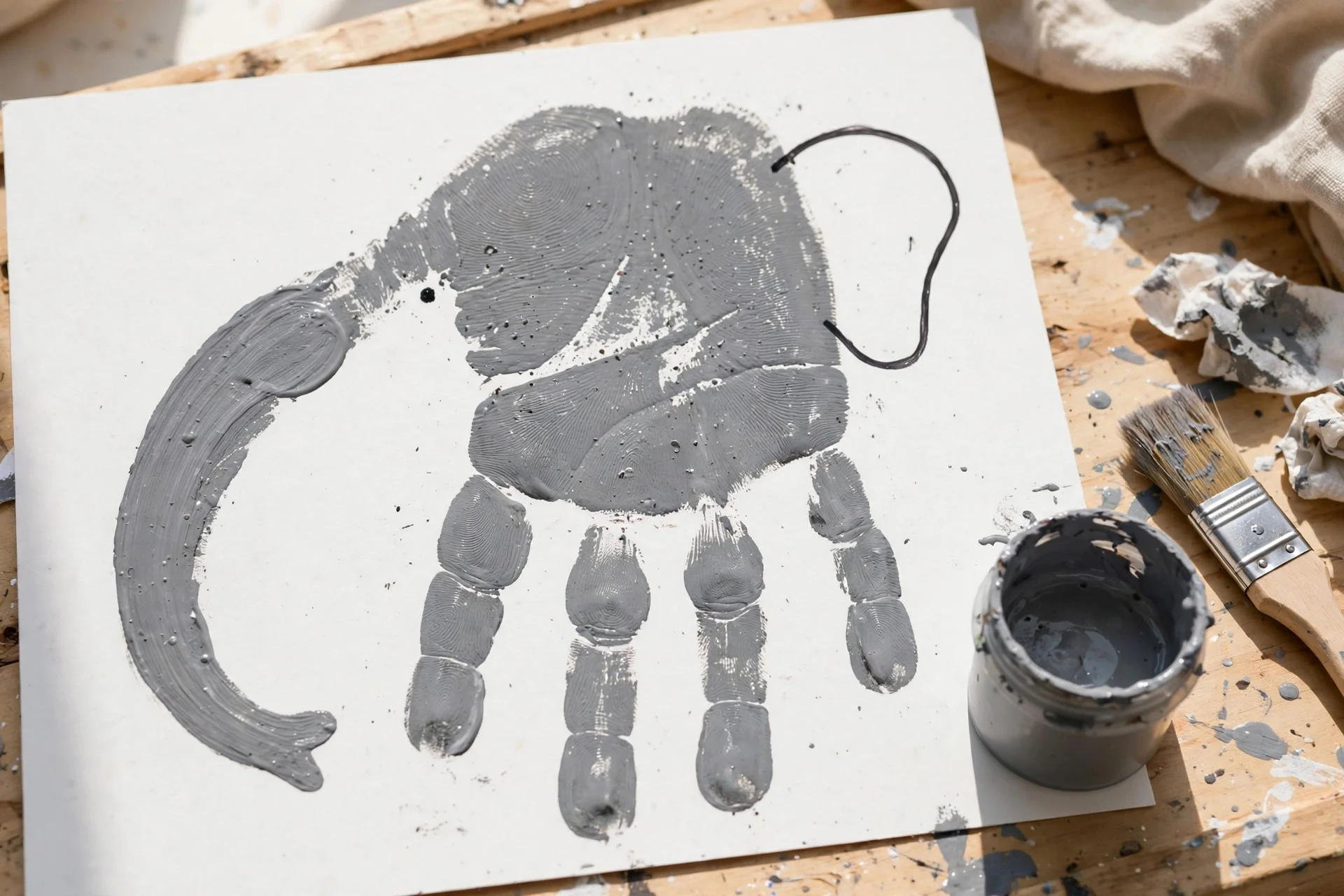
The elephant prints sideways, which trips people up: paint the hand gray, then press it with the fingers pointing down and the thumb sticking out to the side. The fingers become legs, the thumb becomes the trunk, and once you draw one eye and a big ear outline over the palm, kids lose their minds a little. No supply list for this one beyond gray paint and a marker — it’s the two-minute animal.
One wobbly-toddler trick that actually works here: don’t paint the hand and then carry a small, greased wildebeest to the paper. Bring the paper to the hand. Set the cardstock on the table, guide their painted hand down, and press on the back of each finger yourself. Three good prints out of five tries is a great average at this age.
3. Handprint Owl
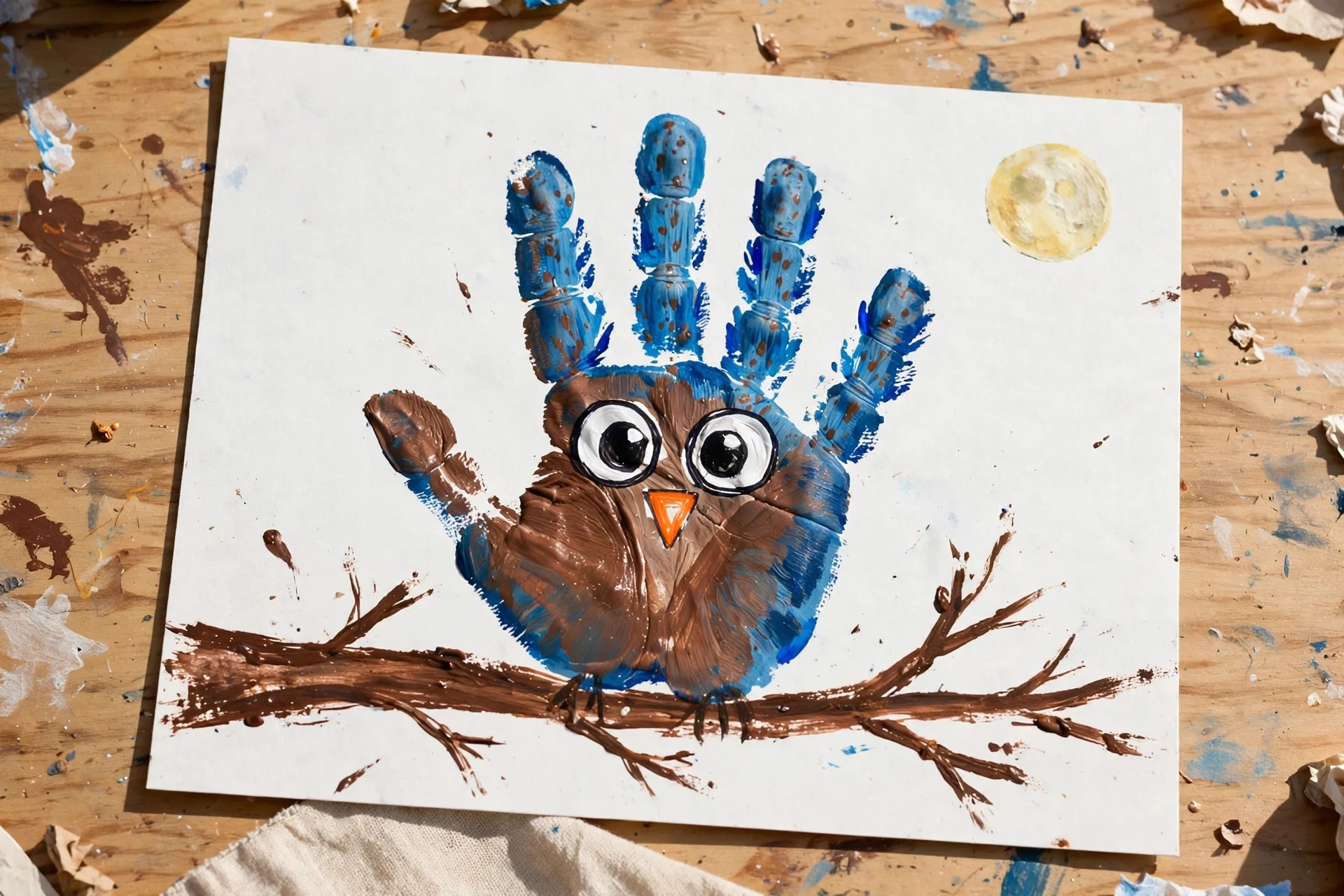
Age: 3+ · Best for: older toddlers and preschoolers who want to do the details themselves
Paint the palm brown and the fingers a blue or teal you love — the print goes fingers-down on the paper, and before it’s dry you drag a brown painted line underneath for the branch. The eyes make this one: two big white circles with black centers, drawn once it’s dry, plus a tiny orange triangle for a beak. My oldest did the eyes on hers with a white crayon first and went over them in paint, which worked better than I’d like to admit.
Make it a keepsake: this is the one we framed for Grandma’s hallway. A dollar-store frame turns a Tuesday craft into a birthday gift, and she has mentioned it in approximately every phone call since.
Sanity saver: paint one hand, print twice. The second print is your backup for when print one goes sideways.
4. Handprint Fox
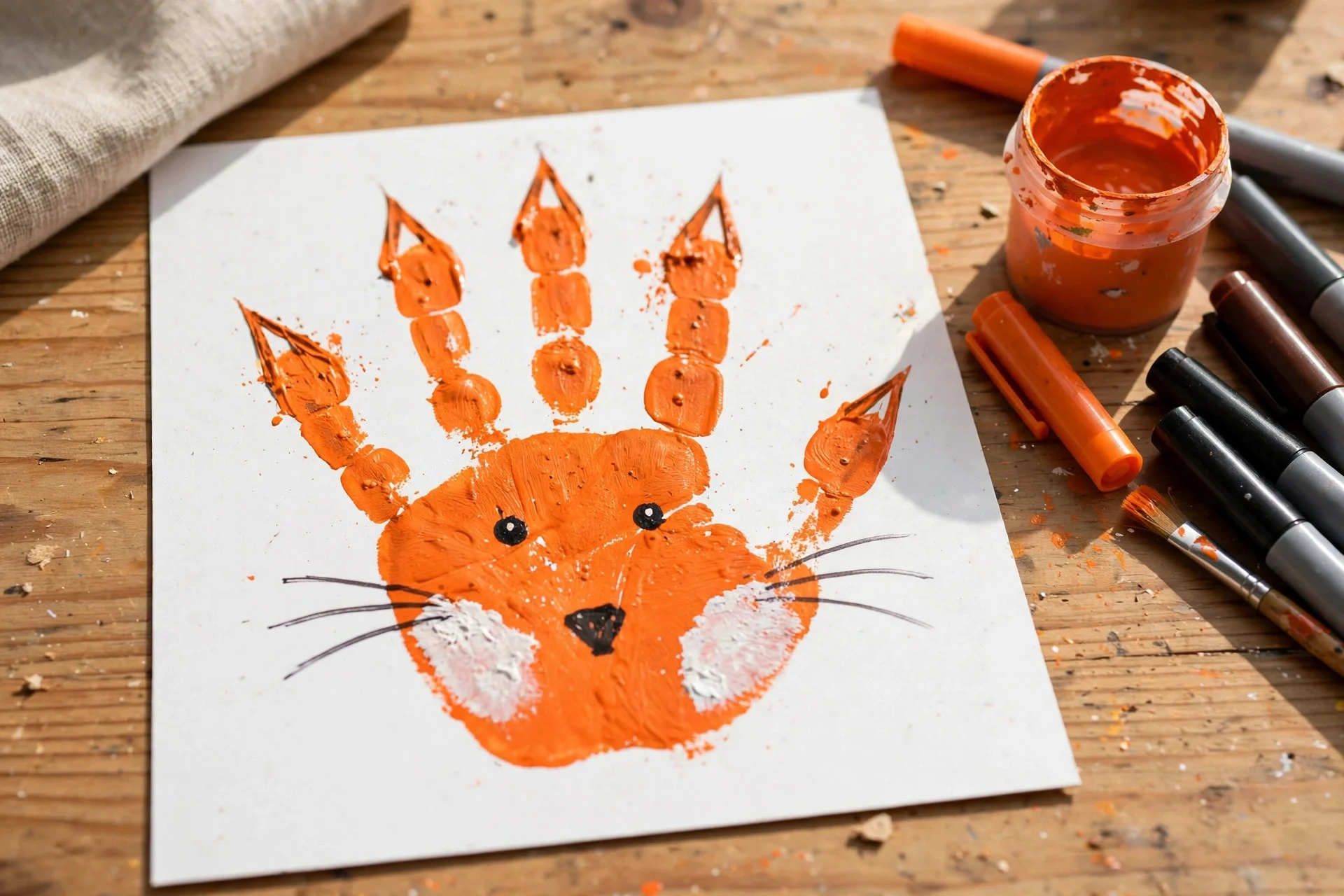
Short version, because the fox is basically the lion’s easier cousin. One orange print, fingers together and pointing up. When it dries, paint two white cheek patches low on the palm, add black triangle ears at the fingertips, a black nose at the heel of the hand, done. If your fox looks a little like a cat, nobody under five will say a word about it, and neither will I.
5. Handprint Penguin
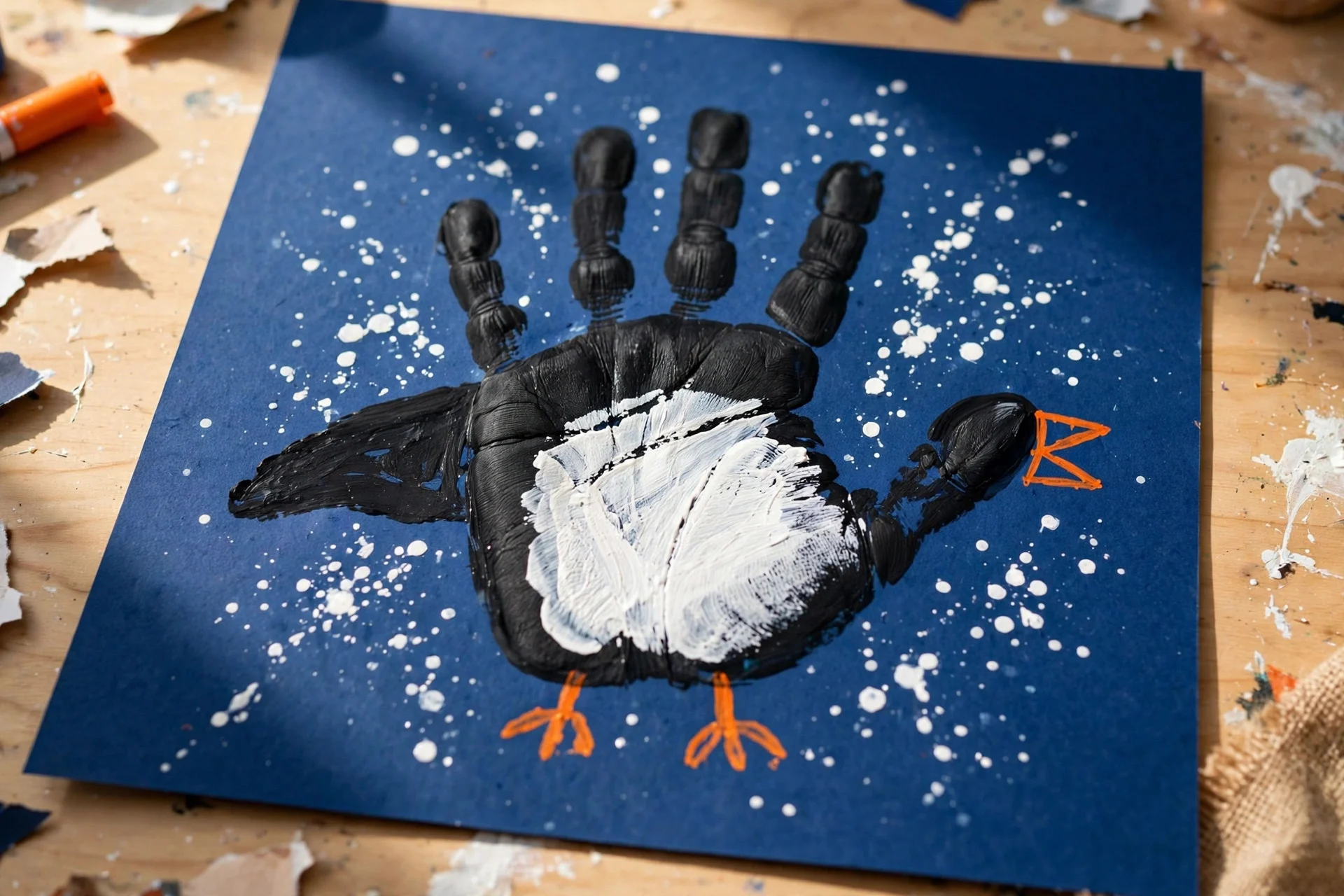
Age: 2+ · Prep: do this one on blue paper — it’s half the charm
- Paint the palm black, fingers black too, and press onto blue cardstock, fingers pointing down.
- Once dry, paint a white oval over the palm for the belly. Small hands will make a blobby oval. Blobby is correct.
- Orange marker triangle for a beak, two orange feet at the bottom, two eyes at the top.
- Fingerprint snow: dip a fingertip in white paint and dot it everywhere around the penguin.
Make it a keepsake: fold the blue sheet in half first and print on the front — it becomes a card. Write “Love, Emma — age 3” inside and it’s the Christmas card the grandparents actually keep.
6. Handprint Flamingo
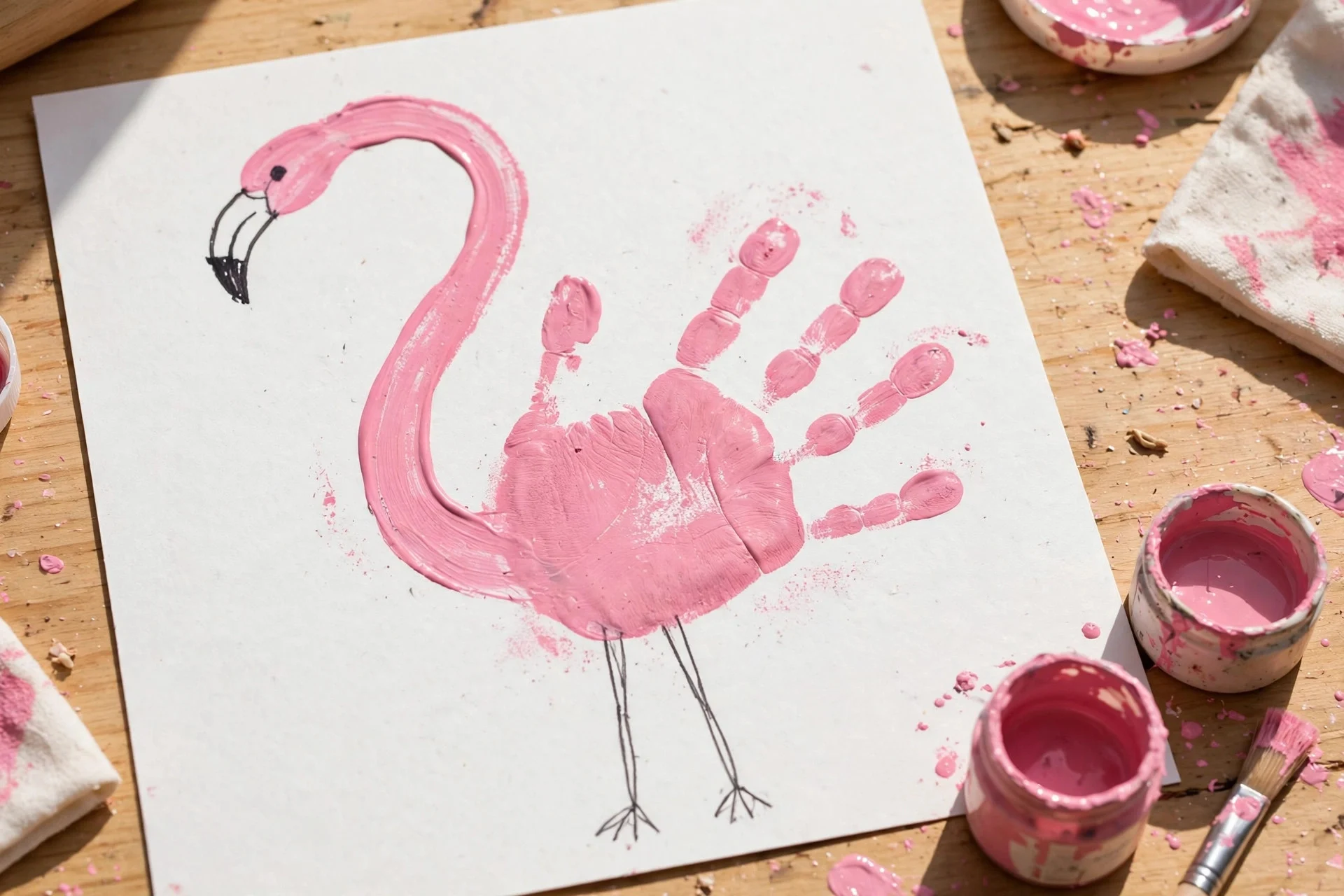
The flamingo is my personal favorite and the one adults stop to photograph. It’s a single pink print, fingers together pointing down, thumb stretched out to the side. The thumb is the neck all on its own — once the print dries, you just extend it with a little pink paint into a curve, add a black-tipped beak and one skinny leg, and it genuinely looks like a flamingo. Kids in the 4-to-6 range tend to demand a whole flock. Let them — a row of these across one long sheet is fridge art at its finest.
Sanity saver: pink paint on a white table will show for a week. Tablecloth down, sleeves up, then call them in.
7. Handprint Giraffe
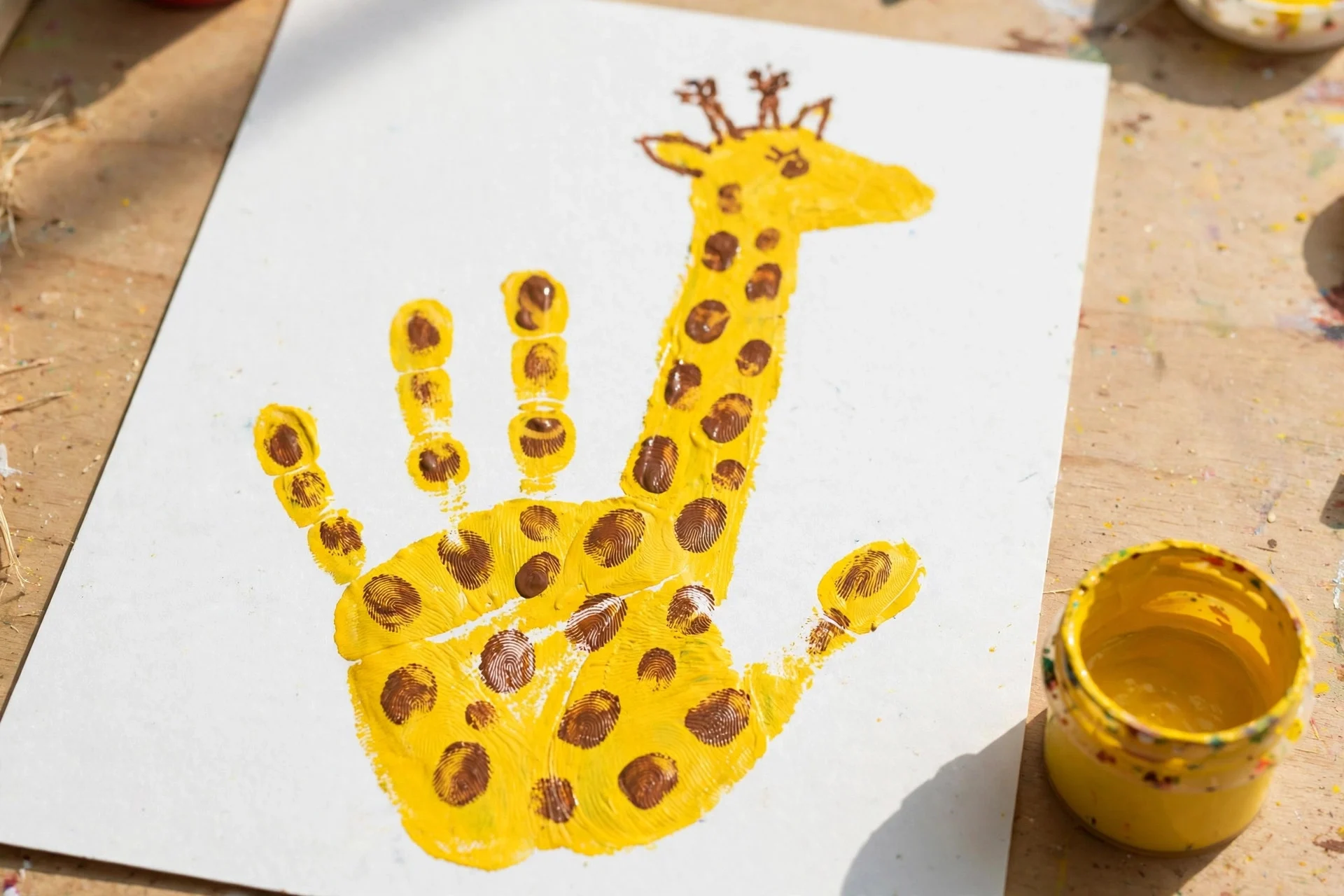
Our giraffe hangs next to the growth chart in the hallway, which started as a joke — a new giraffe every birthday, the hand gets bigger, the neck (fingers pointing straight up, pressed tall) gets longer. Print in yellow, then let your child dab brown spots on with a fingertip; the spots are the whole job as far as they’re concerned. Two little horns and an eye in marker, and if you do the birthday-giraffe thing too, write the height next to it. Three years of them lined up will get you when you’re not expecting it.
8. Handprint Panda
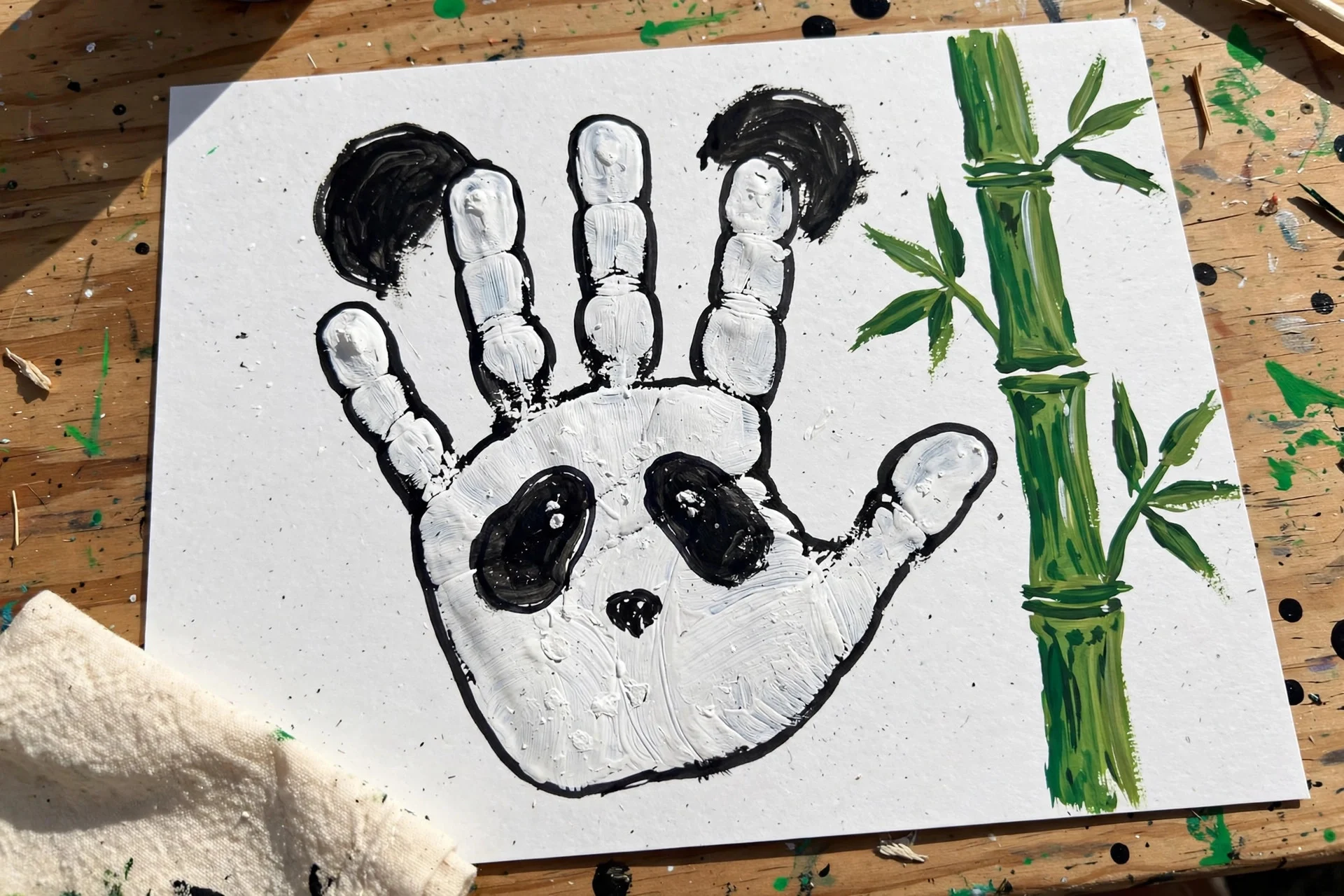
Age: 4+ — this one needs a steadier hand for the black details, so it’s a good big-kid pick
Print the hand in white paint on white cardstock (yes, it looks invisible going on — outline the print lightly in pencil once it dries so you can find it again). Then the black marker and black paint do everything: two round ears at the top corners of the palm, two eye patches, a nose. A green bamboo stalk painted down one side finishes it. Of all eight animals, this is the one where I’d print a spare. White-on-white waits for no toddler.
Sanity saver: wash hands between colors, not after the craft. One gray rinse cup per kid prevents the everything-turns-brown problem.
How to Get the Free Templates
Every animal above also exists as a printable template — the outline printed for you, sized for little hands, so you can skip the “which way do the fingers go” part entirely. The templates live in our Free Template Library, which you can unlock through the Nest List sign-up on the homepage: one email, and you’re in, plus a new free template lands in your inbox every Friday. If you’d rather skip straight to the whole zoo, the full set of 12 animals (these eight plus a turtle, peacock, tiger and butterfly) is bundled in the Handprint Bundle in the shop. And once your crew outgrows handprints, the rest of our kids crafts will keep you busy.
Questions I Get About Handprint Crafts
What’s the best paint for baby handprints?
Washable tempera, full stop. It’s non-toxic, it’s made to come off skin and sleeves, and it prints with good solid color. Skip acrylic — it stains everything it touches, including the baby. For babies under one, paint a footprint instead; it photographs just as sweet and nobody has to unclench tiny fingers.
What age can kids start handprint crafts?
You can get a decent print from about 6 months if a second adult helps hold the wrist, but the sweet spot starts around 18 months, when they’ll press down on purpose about half the time. By 4 and 5 they’re doing the details themselves and correcting your spelling on the keepsake line.
How do I get a clear print from a wiggly toddler?
Paint with a foam brush (more even than dipping), keep the paper on the table rather than holding it up, and you press gently on the back of each finger while they “help.” Then lower your standards by about 30%. A slightly smeared print with their name on it beats a perfect one they cried through, every time.
How should I store or display all these keepsakes?
My system is embarrassingly simple: a cheap portfolio folder per kid, everything goes in it, the best one from each round gets framed or photographed for the grandparents. Photograph everything regardless — paint fades over the years, phones don’t.
Some of these will come out charming. Some will come out looking like modern art and a small crime scene had a baby. Both kinds are worth keeping — the wonky elephant from the year my son was two is the one I’d grab in a fire.
📌 Save this for your next rainy day.
Want a fresh template in your inbox every Friday? Join the Nest List on the homepage — it takes ten seconds and there’s always a free printable in it for you.
