
Things to Sew for Your Kitchen
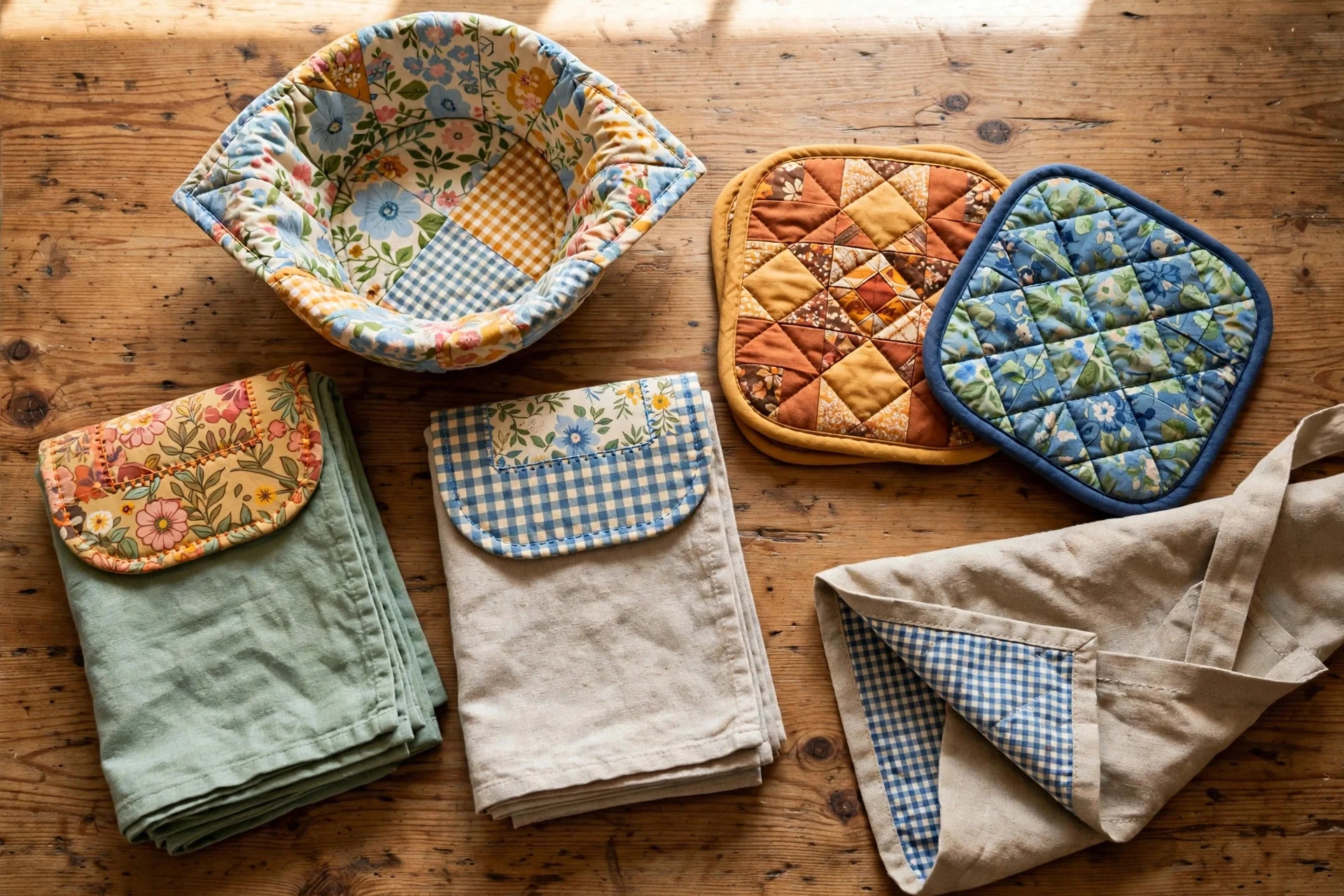
Last November, at our church craft fair, I watched a lady pick up a bowl cozy from my table, turn it over twice, and say the exact thing I hear every year: “I could make this.” Then she bought three. She’s right — she absolutely could make one, in about twenty minutes, from two fat quarters. That’s true of everything on this list. These are the things to sew for your kitchen that I actually live with: the towel that never lands on the floor, the pot holders that have survived six years of cast iron, the funny little bag that ate the plastic bag problem under my sink.
Almost all of them come out of the scrap bin or a single fat quarter, and every one of them works harder than the store-bought version it replaced. The bought ones are always too thin, too small, or printed with something I’d never choose. Yours won’t be.
A Quick Word About Fabric Before You Start
One rule covers most of this list: anything that goes near heat or into the microwave gets sewn in 100% cotton — fabric, batting, and thread, all three. Polyester blends can melt, and metallic prints are a hard no for the microwave (I learned that one with a very exciting spark and a smell I can still remember). For pot holders and oven mitts I add a layer of Insul-Bright, the heat-reflective batting, because cotton batting alone isn’t enough for a Dutch oven. Everything else is forgiving. Quilting cotton is my default, and I prewash anything that will meet a spill — which in my kitchen means everything.
1. Bowl Cozies
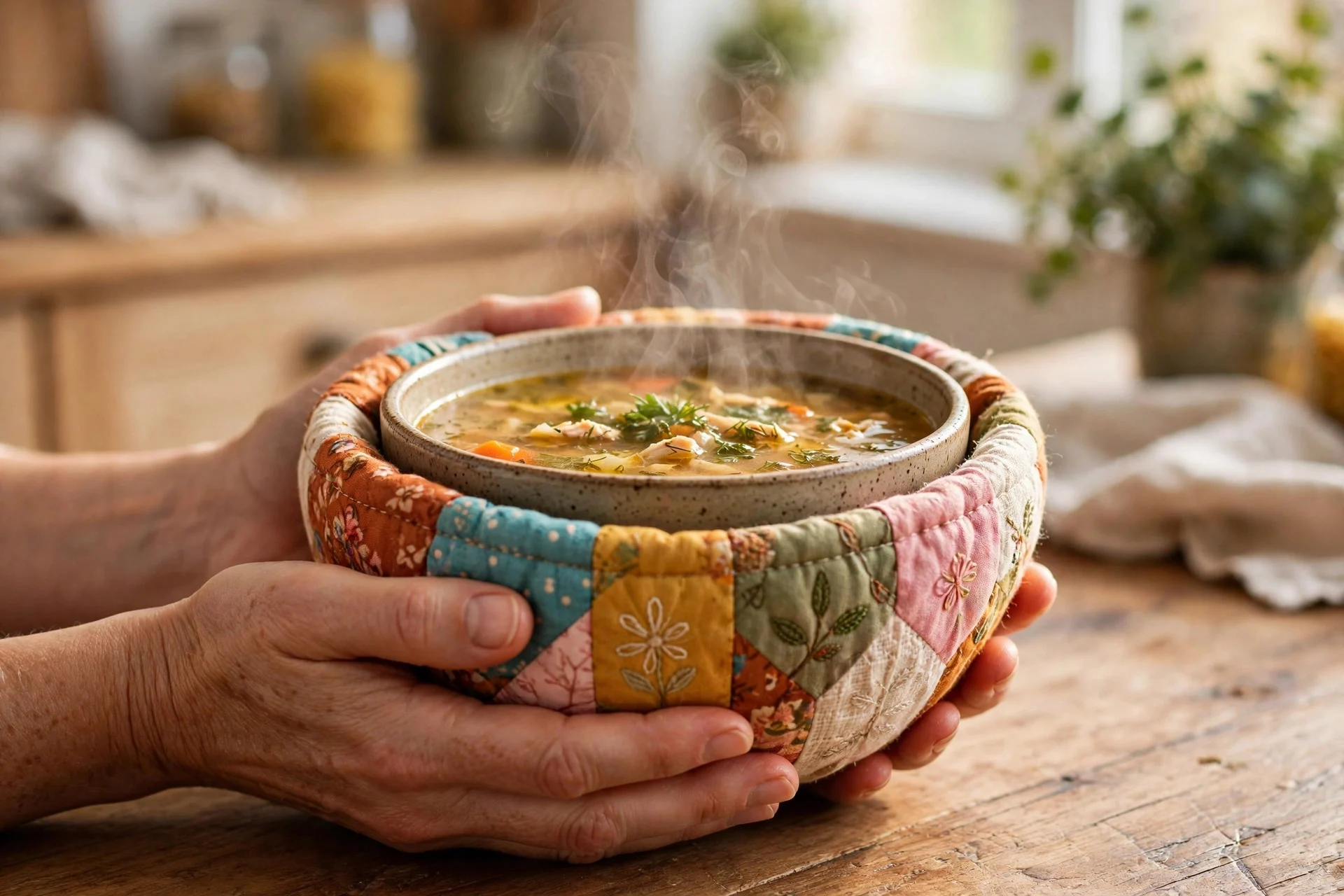
Time: about 20 minutes · Level: Beginner · Fabric: 2 fat quarters + cotton batting
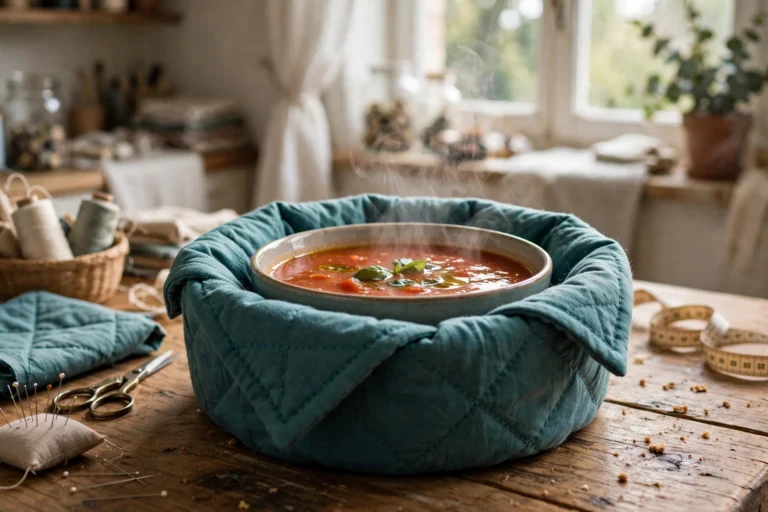
If I could only sell one thing, this would be it. Two 10-inch squares of cotton, two of batting, a few darts, and you’ve got a little fabric nest that lets you carry soup straight out of the microwave without the potholder shuffle. I keep four by the microwave and my kids use them for ice cream bowls too, which I did not see coming. At fairs they sell out by eleven. Get the full step-by-step with the free pattern in my bowl cozy sewing tutorial — it’s the project I’d hand any brand-new sewist first.
2. Hanging Dish Towel Toppers
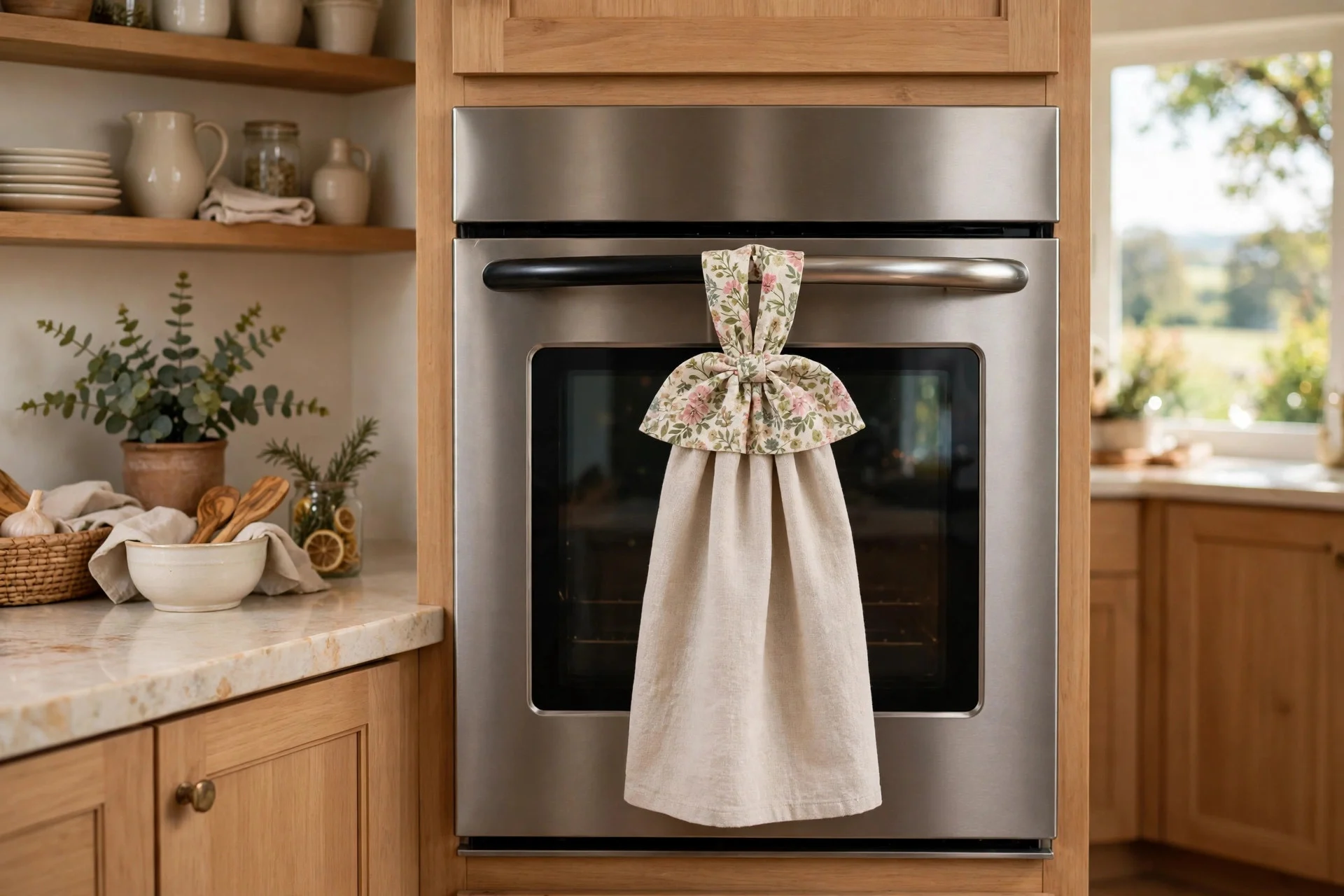
This is the first thing I ever sold, at that same church fair, off a card table I shared with a lady selling jam. I priced them at six dollars because I was nervous, and a woman bought five — one for every daughter-in-law. The idea is old as the hills: cut a tea towel in half, sew a fabric topper across the cut edge, and button it over your oven handle. Two towels from every one you cut, which still feels like a magic trick.
Mine take about twenty minutes, most of it pressing. The part nobody tells you: gather the towel edge evenly before you sandwich it in the topper, or one side hangs longer and it will bother you every single day. Ask me how I know. And use a towel you’d actually dry dishes with — the thin decorative ones go sad in the wash.
3. A Simple Lined Apron
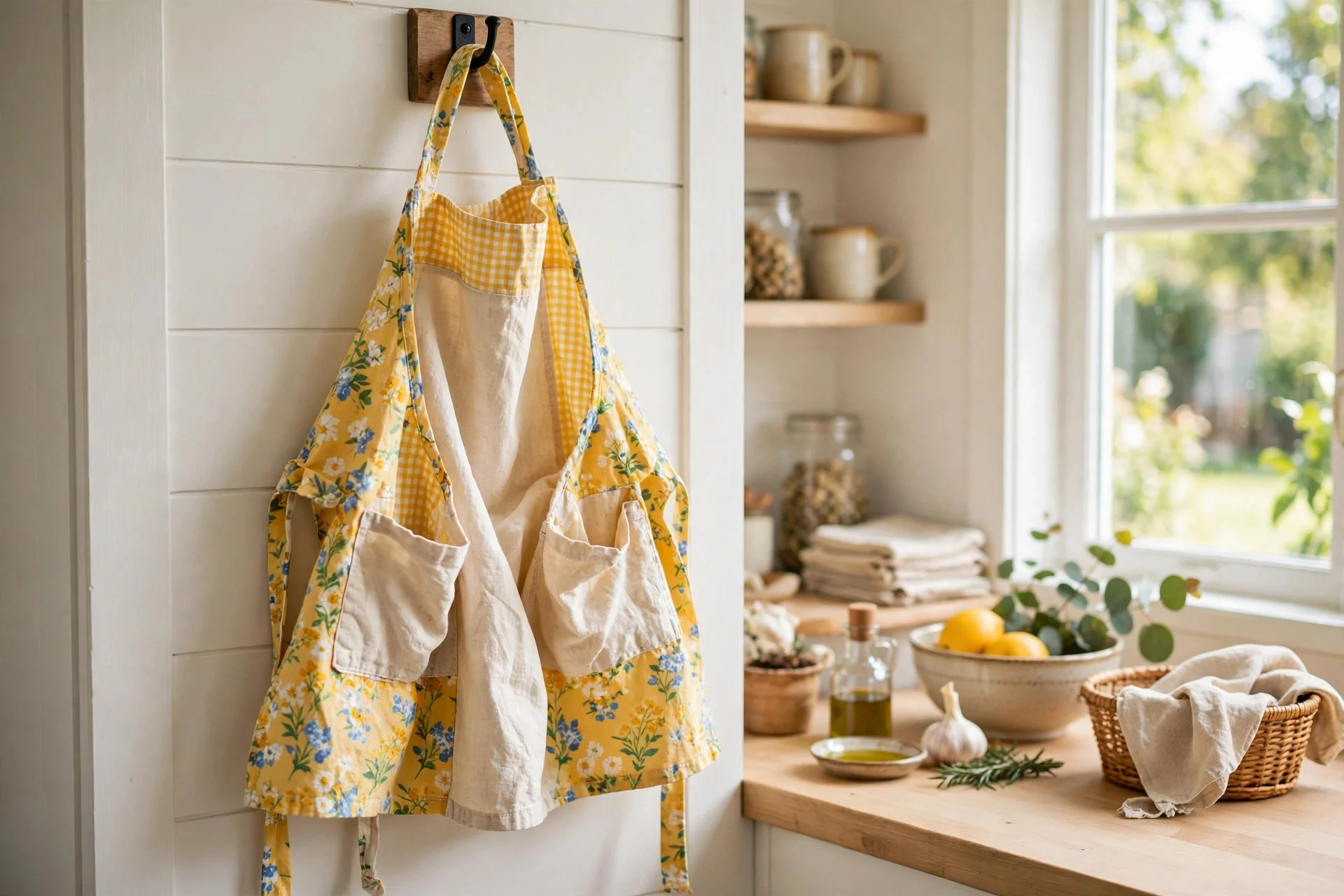
Every apron I’ve ever been given has had the same two flaws: ties too short to wrap around front, and one shallow pocket that fits nothing. So I sew my own.
You need:
- 1 yard of quilting cotton or light canvas for the outside
- ½ yard of a contrast fabric for the lining and pocket
- About 3 yards of twill tape or extra fabric for long, generous ties
The construction is nothing fancy — two shaped pieces sewn right sides together, turned, pressed, topstitched. What makes it mine is a pocket divided down the middle with one stitching line: phone on one side, recipe card and a pen on the other. Make the ties long enough to tie in front. You’ll thank yourself every time you’re mid-recipe with floury hands.
4. Quilted Pot Holders
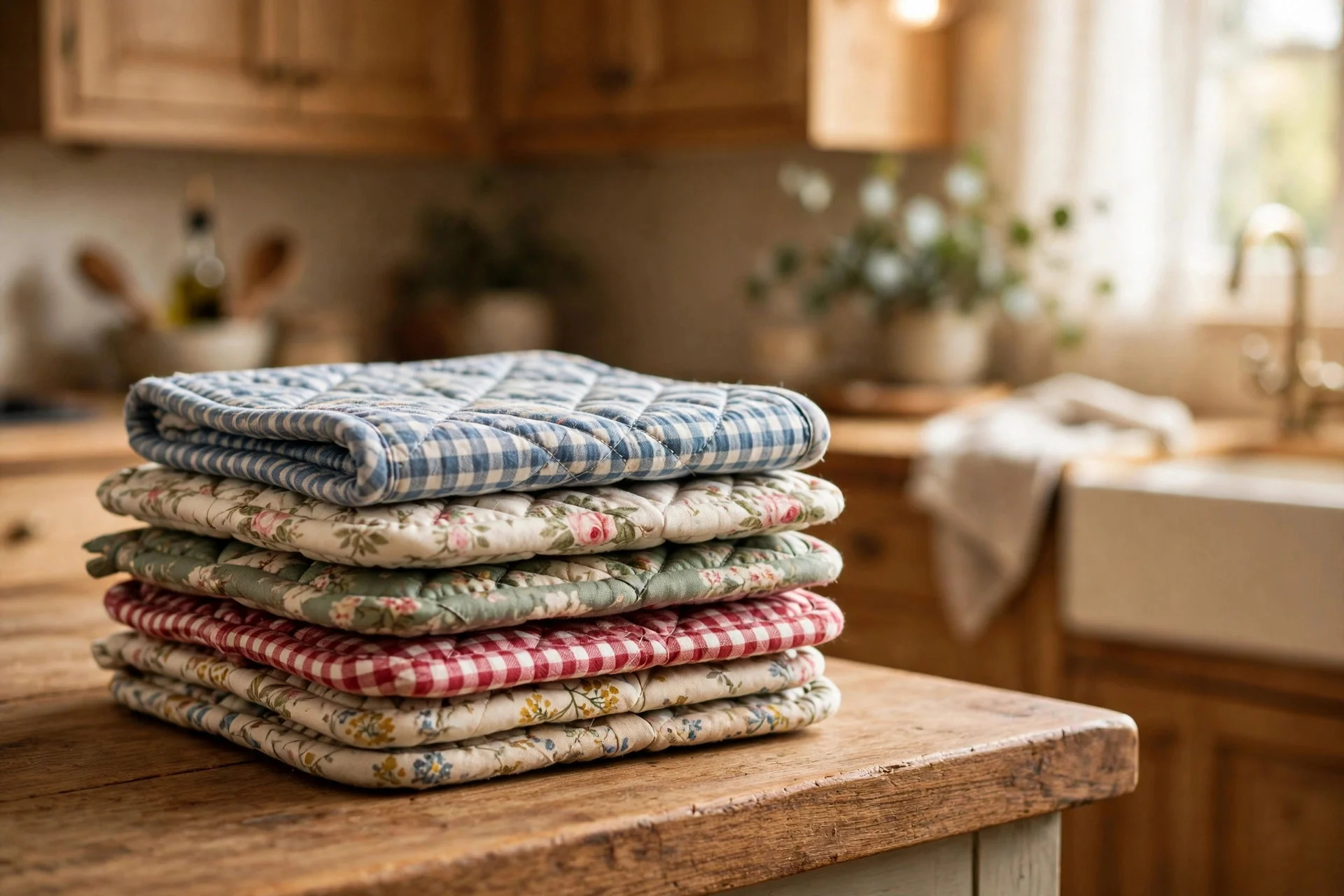
Time: about 30 minutes · Level: Beginner · Fabric: scraps + Insul-Bright offcuts
Pot holders are where my scrap bin goes to retire. Two 8-inch squares of cotton, a layer of Insul-Bright and a layer of cotton batting in the middle, a few quilting lines across, bias binding around the edge, done. The binding is the only fiddly bit and nobody in the history of kitchens has inspected a pot holder’s binding at close range. I make them in pairs because they sell in pairs and because one is always in the wash. Square corners are fine, by the way — the rounded corners on mine are pure showing off.
5. Grocery Bag Holder
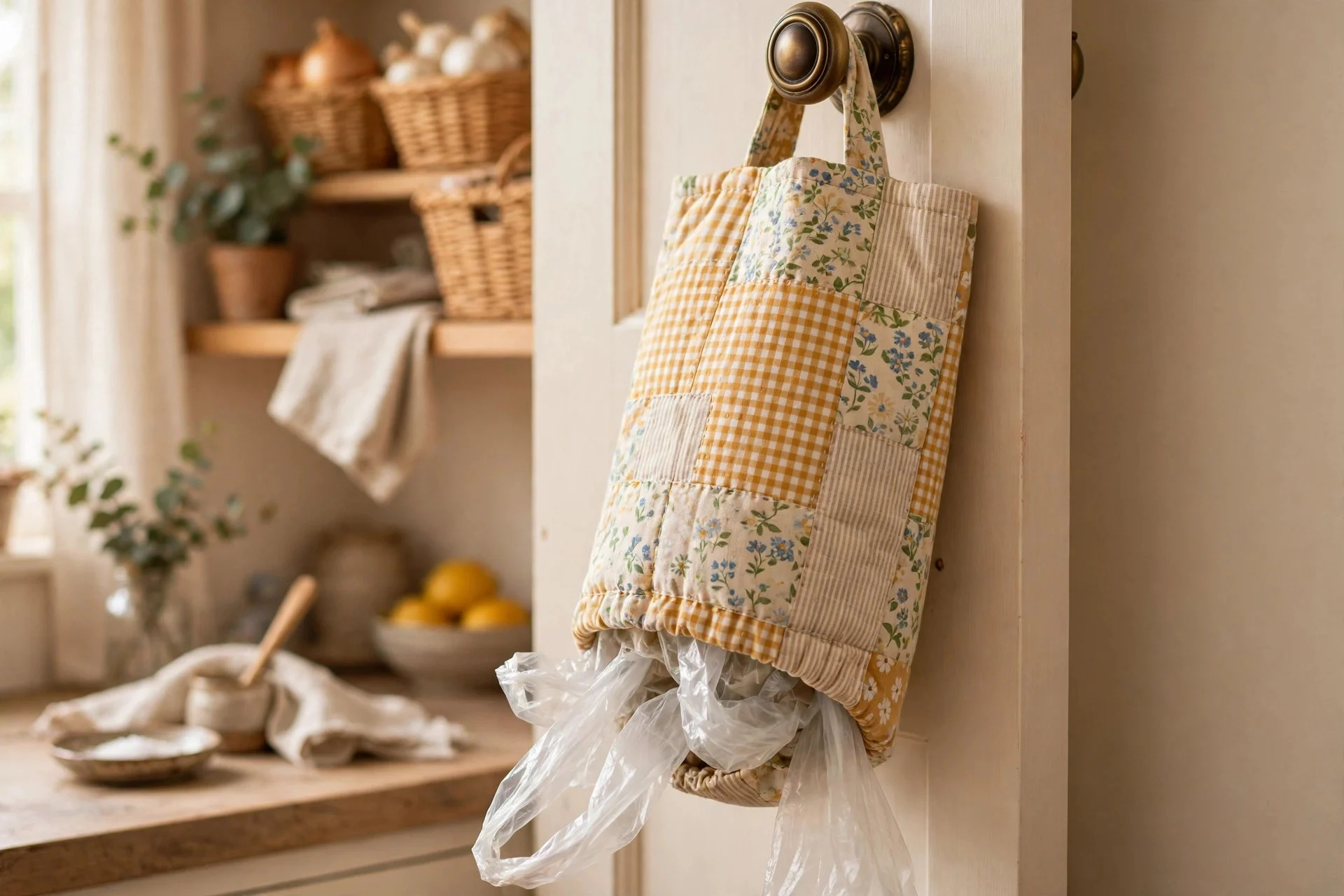
You know the plastic bags. They breed under the sink. This is the fix your grandmother had: one fat quarter sewn into a long tube, elastic at both ends, a loop on top for the pantry door. Stuff bags in the top, pull them out the bottom. Fifteen minutes, mostly straight seams, and mine has held roughly forty bags at its most shameful. Hang it and forget what’s inside until you need one.
6. Jar Opener Pads
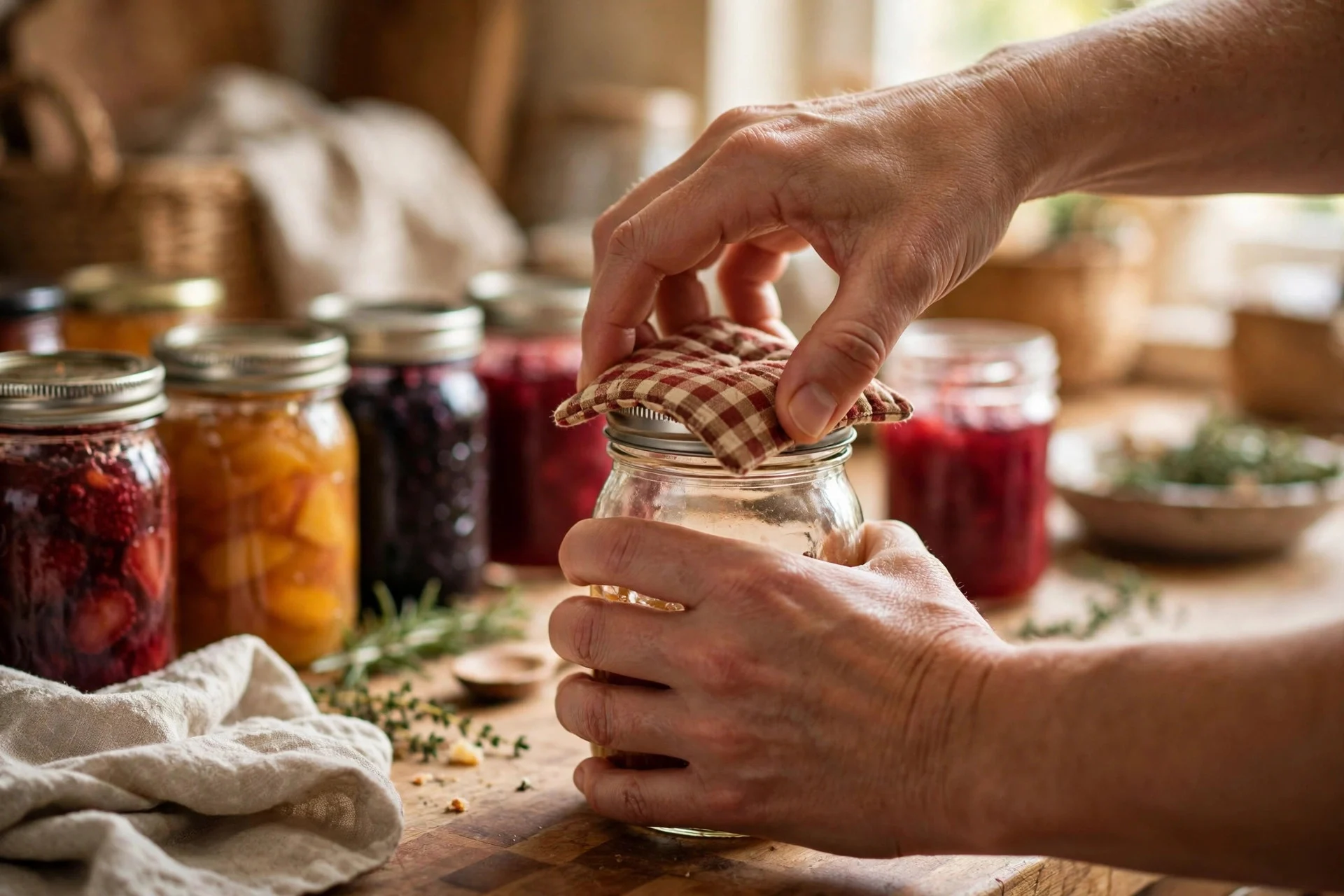
The smallest project on this list and maybe the most used. Sew two 5-inch fabric squares around a square of rubber shelf liner — the grippy kind from the dollar store — and you’ve got a pad that opens jars my husband has already tried and failed on. There’s real satisfaction in that, I’m not going to lie. They take maybe ten minutes, they use the tiniest scraps, and I tuck one into nearly every handmade gift I give. My dad keeps his in the glove box of his truck, for reasons that remain his own.
7. Reversible Placemats
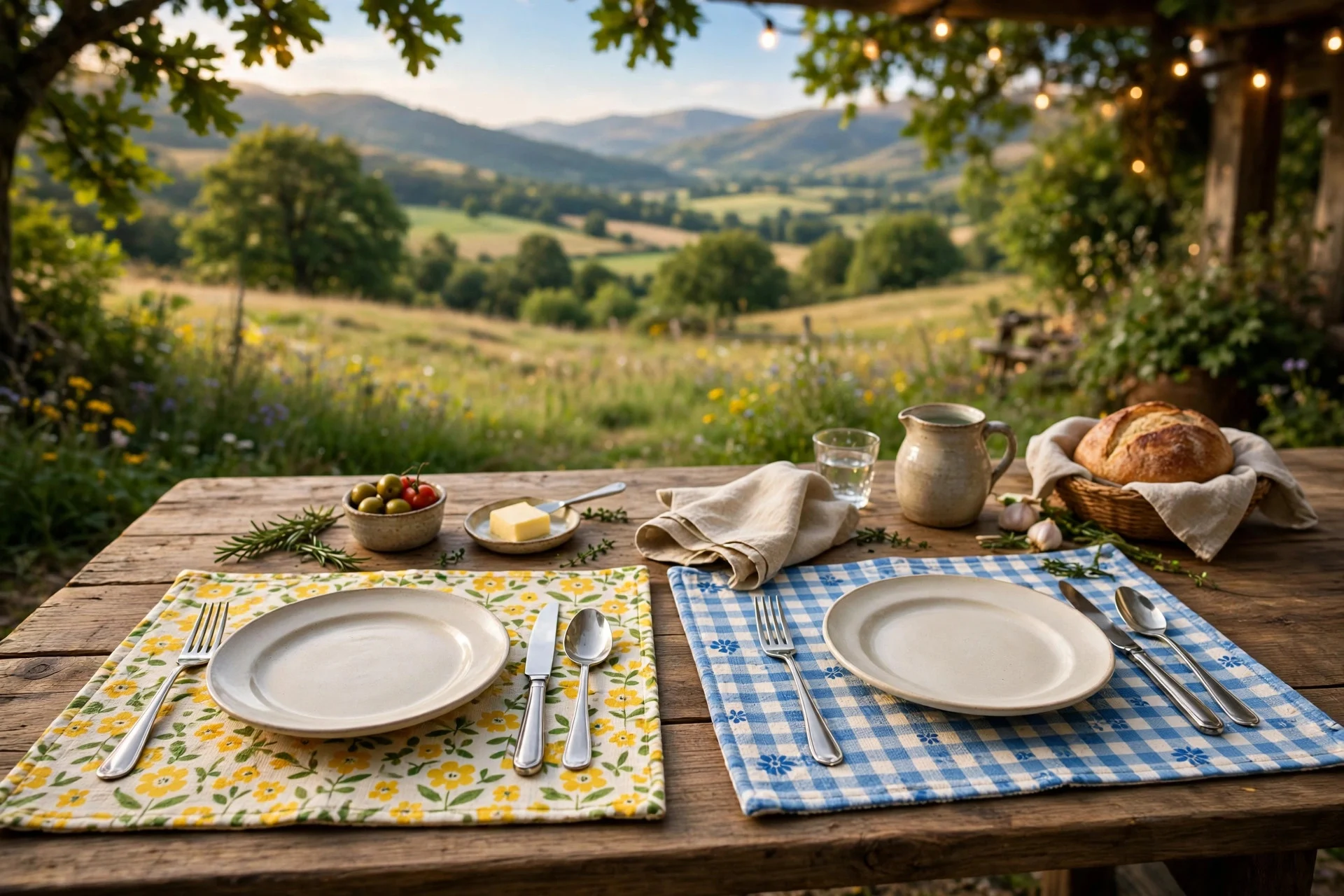
Two moods, one placemat. I make these in sets of four or six, a print on one side and a solid or stripe on the other, so Tuesday’s spaghetti and Sunday’s company both get a look.
You need:
- ½ yard each of two coordinating cottons (makes 4)
- ½ yard of thin cotton batting or fusible fleece
- Thread you don’t mind seeing — the topstitching shows
Cut rectangles about 13 by 18 inches, layer, sew, turn, and topstitch close to the edge. That topstitching line is doing real work: it keeps the layers from shifting in the wash and gives the whole thing a finished, store-bought crispness. Mine have been washed approximately nine hundred times.
8. Drawstring Produce Bags
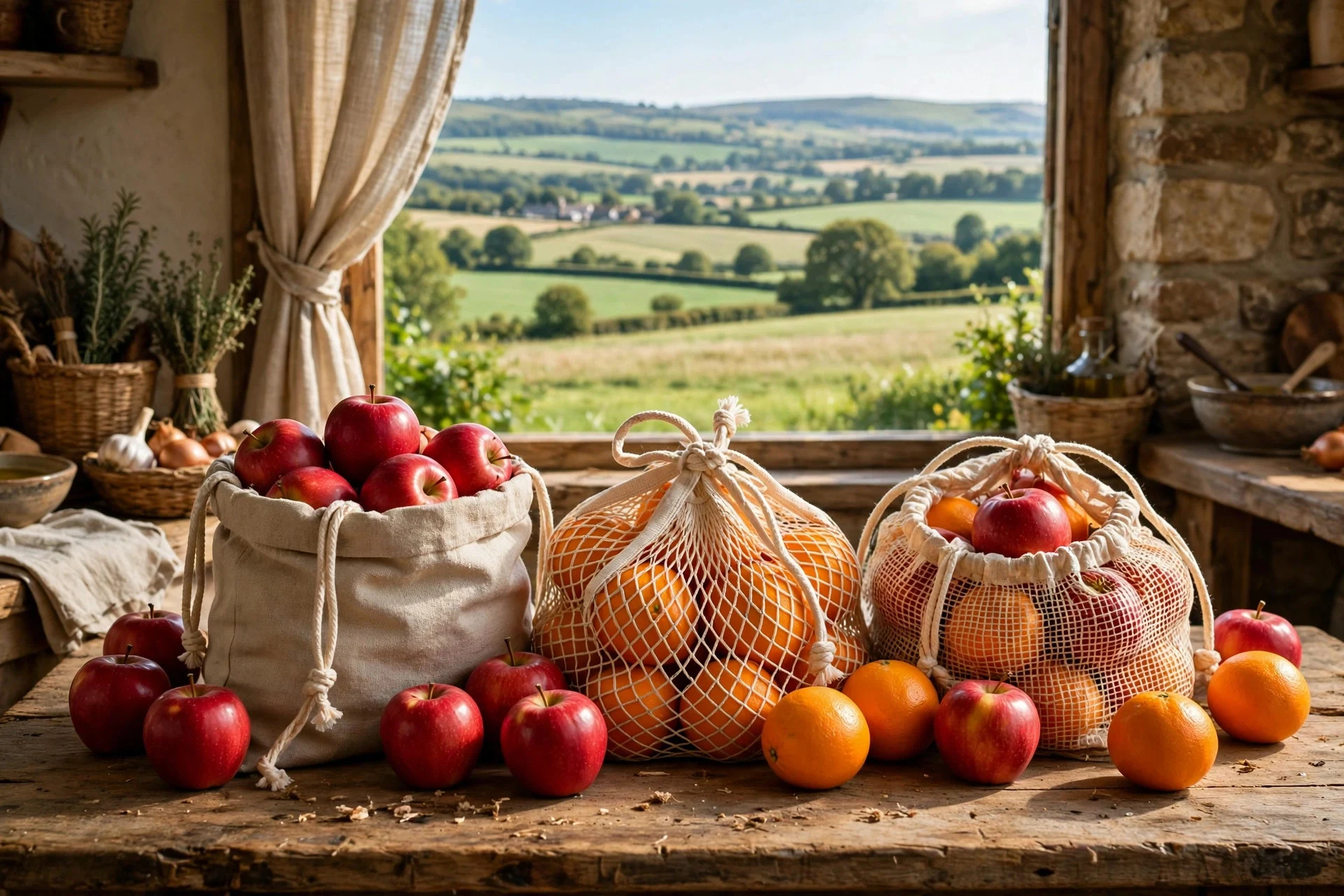
Time: about 15 minutes each · Level: Beginner · Fabric: lightweight cotton or mesh + cotton cord
I got tired of fighting the tear-off plastic rolls at the grocery store — you know the ones, they only open for other people. These are simple drawstring sacks in three sizes, and the trick is keeping them light: muslin or mesh weighs almost nothing at the register, so you’re not paying apple prices for your bag. A casing at the top, a cord through it, French seams if you’re feeling virtuous. I keep six rolled in my purse and they wash with the towels.
9. Utensil Roll for Drawers & Picnics
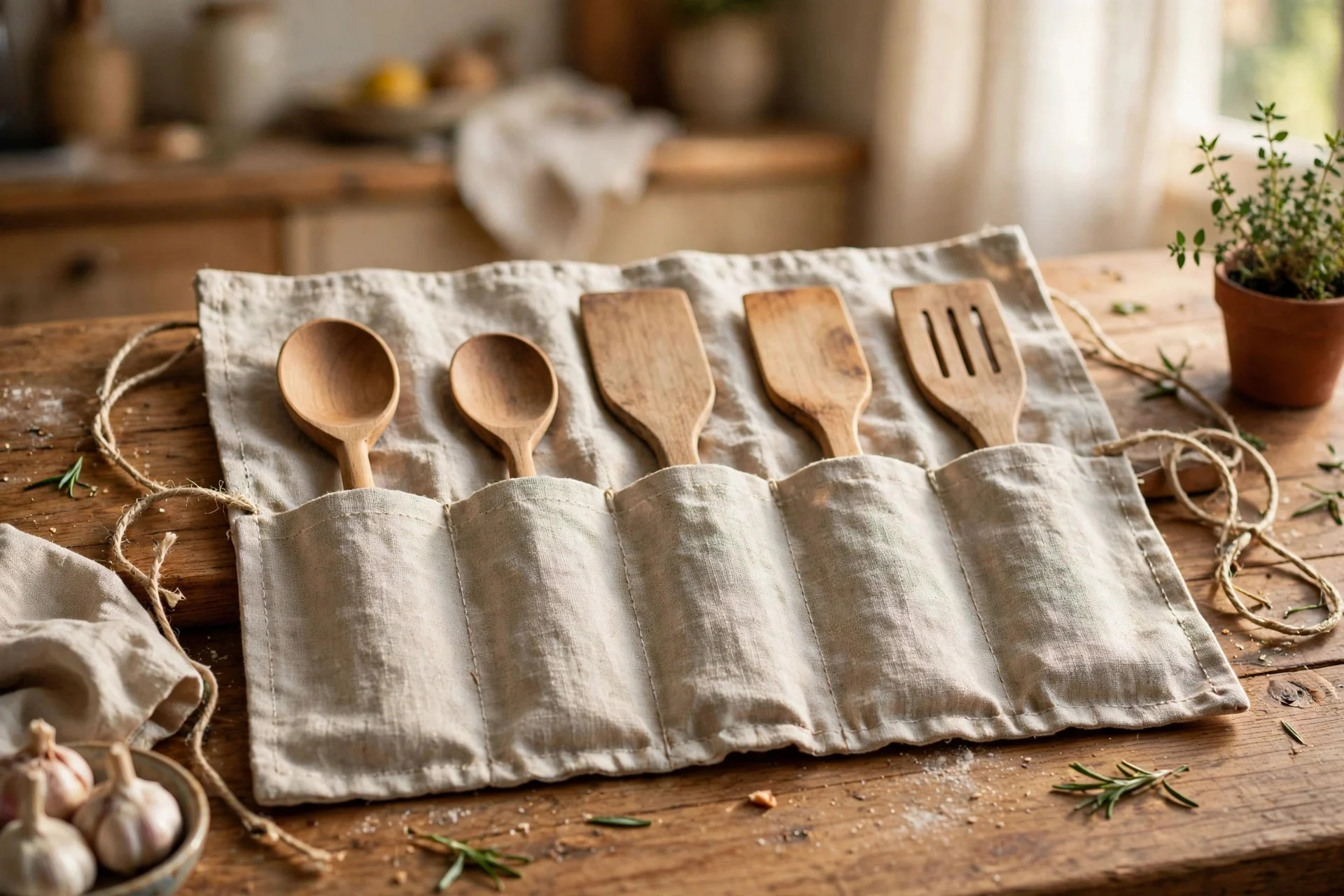
I made the first one of these for my oldest when she moved into her first apartment, where the kitchen drawer was roughly the size of a shoebox. It’s a rectangle of sturdy cotton — canvas if you have it — with a row of pockets stitched across the bottom half, in different widths because a whisk and a teaspoon do not have the same needs. Fold the top down like a flap, roll it up, tie it shut. Hers still lives in that drawer. Mine lives in the picnic tote, because park benches and loose forks are a combination I’ve finished with. Forty minutes, mostly measuring pockets, and it’s the project that gets me the most “wait, you MADE that?” reactions.
10. Double Oven Mitt
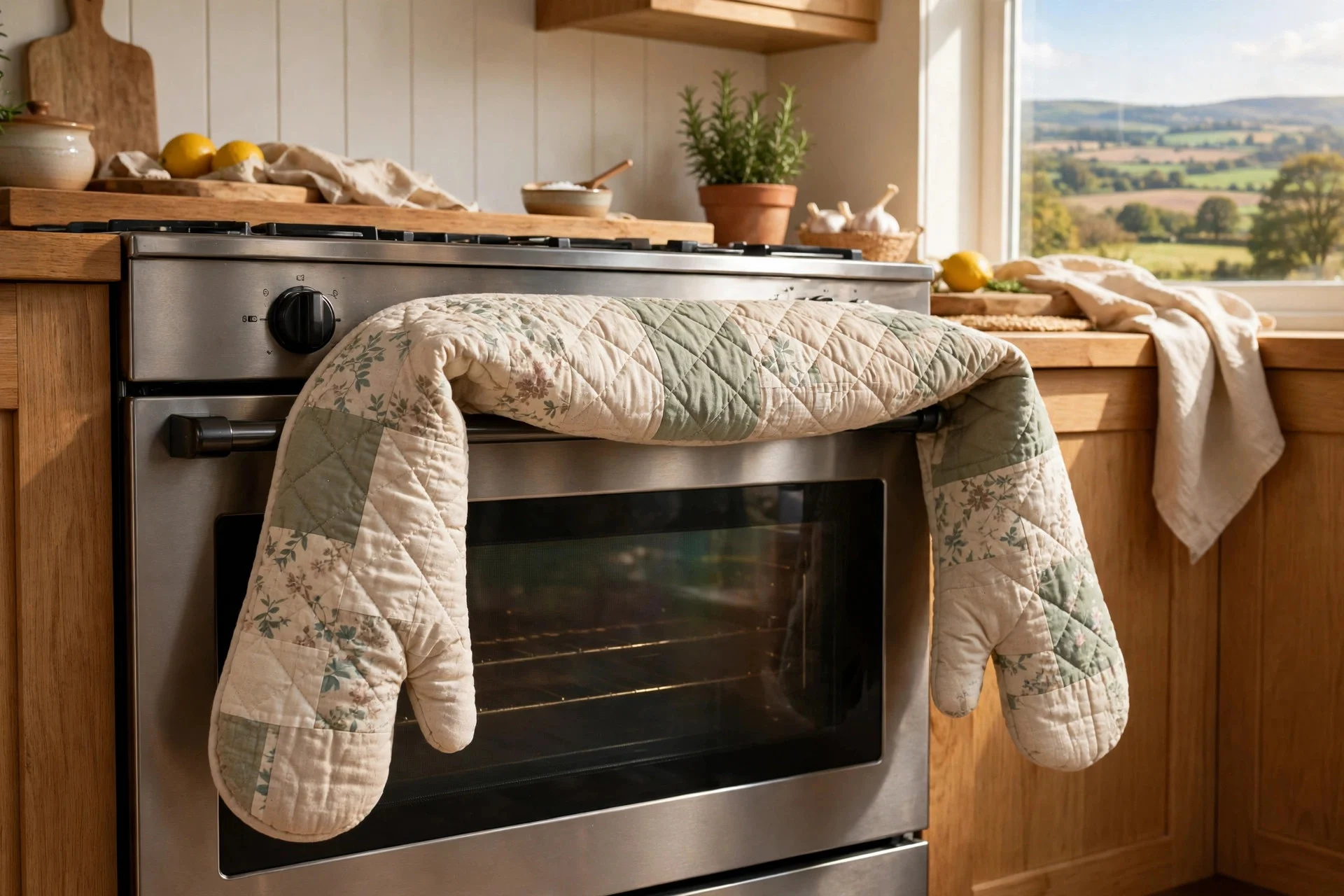
Time: about 1 hour · Level: Confident beginner · Fabric: ½ yard cotton + Insul-Bright
The showpiece. One long quilted strip with a mitt at each end, made for hauling out casserole dishes and the Thanksgiving turkey pan without that anxious two-potholder waddle. This is the one project where I won’t budge on materials: Insul-Bright in both mitts and the middle, cotton everything, because your forearms are trusting this thing. The seams are straight lines — the binding around the mitt curves is what teaches you patience. Mine hangs over the oven door year-round, scorch marks and all. Make it in a fabric that matches nothing the recipient owns. They’ll use it daily anyway.
What I Actually Charge at Craft Fairs
Here’s my honest price list, the one taped inside my cash box. Adjust for your area, but don’t go lower out of shyness — fabric costs money, and so does knowing how to sew.
- Bowl cozies — $10 each, or 3 for $25 (the bundle moves them fast)
- Towel toppers, towel included — $12
- Pot holders — $8 each, $15 for a pair
- Jar opener pads — $3, or free with any $20 purchase
- Lined aprons — $25
- Double oven mitts — $18
Pretty prints sell before solids, every time, and Christmas fabric in November outsells everything else on the table combined.
Questions I Get About Sewing for the Kitchen
What is the best fabric for kitchen sewing?
100% cotton, full stop. Quilting cotton for most projects, cotton canvas for anything that takes a beating like the utensil roll. For heat items, the cotton has to go all the way through — batting and thread included — because polyester can melt and metallic prints can’t go in the microwave.
I’m a total beginner. Can I really make these?
Yes, and I’d start with the jar opener pad or a pot holder — straight seams, small pieces, finished before your coffee cools. Everything here is rectangles and straight stitching except the apron’s gentle curves. Your first one will be a little wonky. So was mine. It’s a pot holder, not a wedding dress.
How much fabric do I need for a starter stash?
Five or six fat quarters in prints you’d put on your own table, a yard of cotton batting, and a small cut of Insul-Bright will carry you through most of this list. Add scraps as you go — kitchen sewing eats scraps faster than any craft I know.
Do I need a serger?
No. Not one project here needs one. A regular machine with a straight stitch does it all; if raw edges worry you, a zigzag stitch or pinking shears handles them. I’ve sewn every item on this list on a basic machine I bought used, and it’s still going.
Pick One and Start This Weekend
Don’t sew all ten. Pick the one that fixes the thing that annoyed you in your kitchen today — the towel on the floor, the jar that won, the drawer of escaping plastic bags — and make that. There are plenty more kitchen-friendly projects waiting in my sewing tutorials whenever you’re ready for round two.
📌 Pin this for your next sewing day — and if you want one free printable pattern in your inbox every Friday, join The Nest List below. That’s where the good scraps go first.
Now go raid that scrap bin. Your kitchen is about to get a whole lot prettier. — Sarah

One Comment